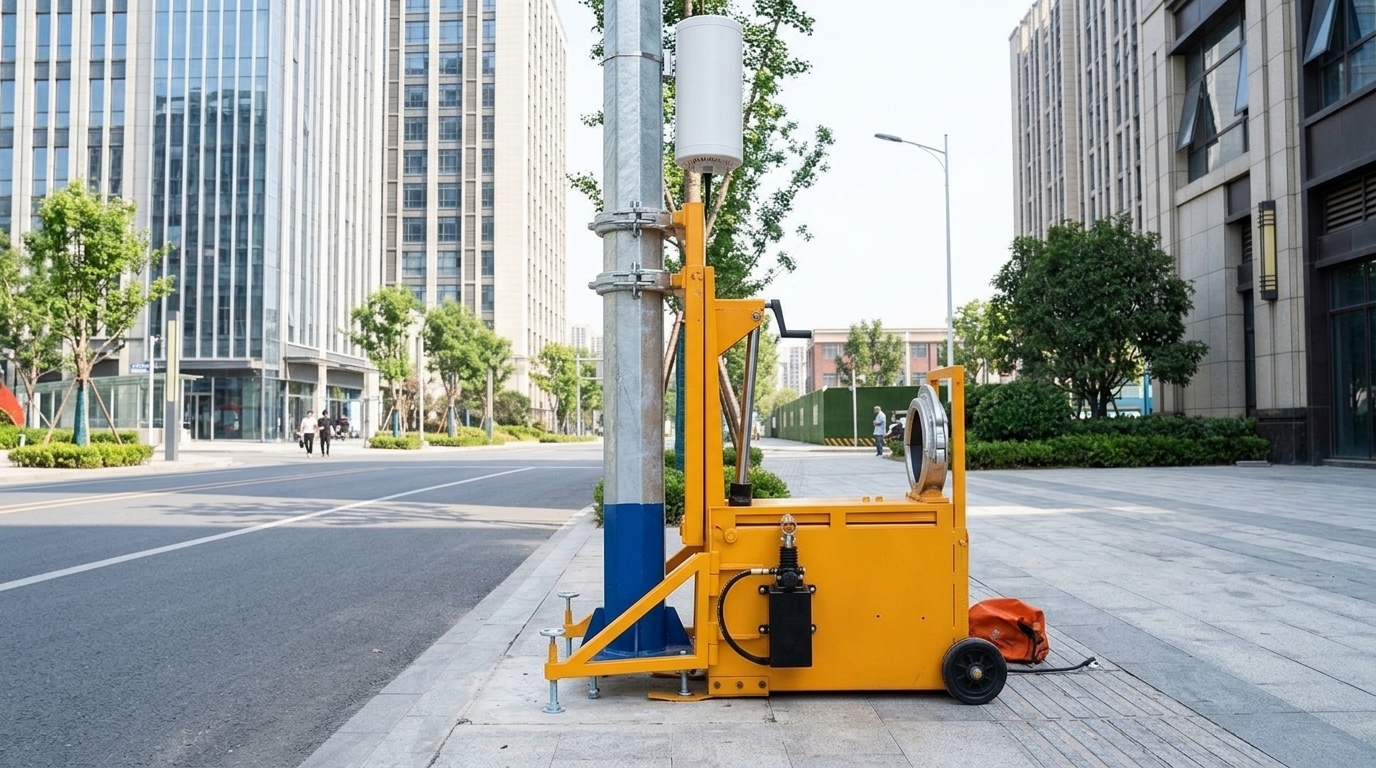
Show the site as it will be used.
Provide a site plan with installation locations, delivery access, staging space and nearby activity. Explain whether work is on an occupied site and what arrangements the project team will make for the work area. Do not infer a suitable operating position from a product photograph.
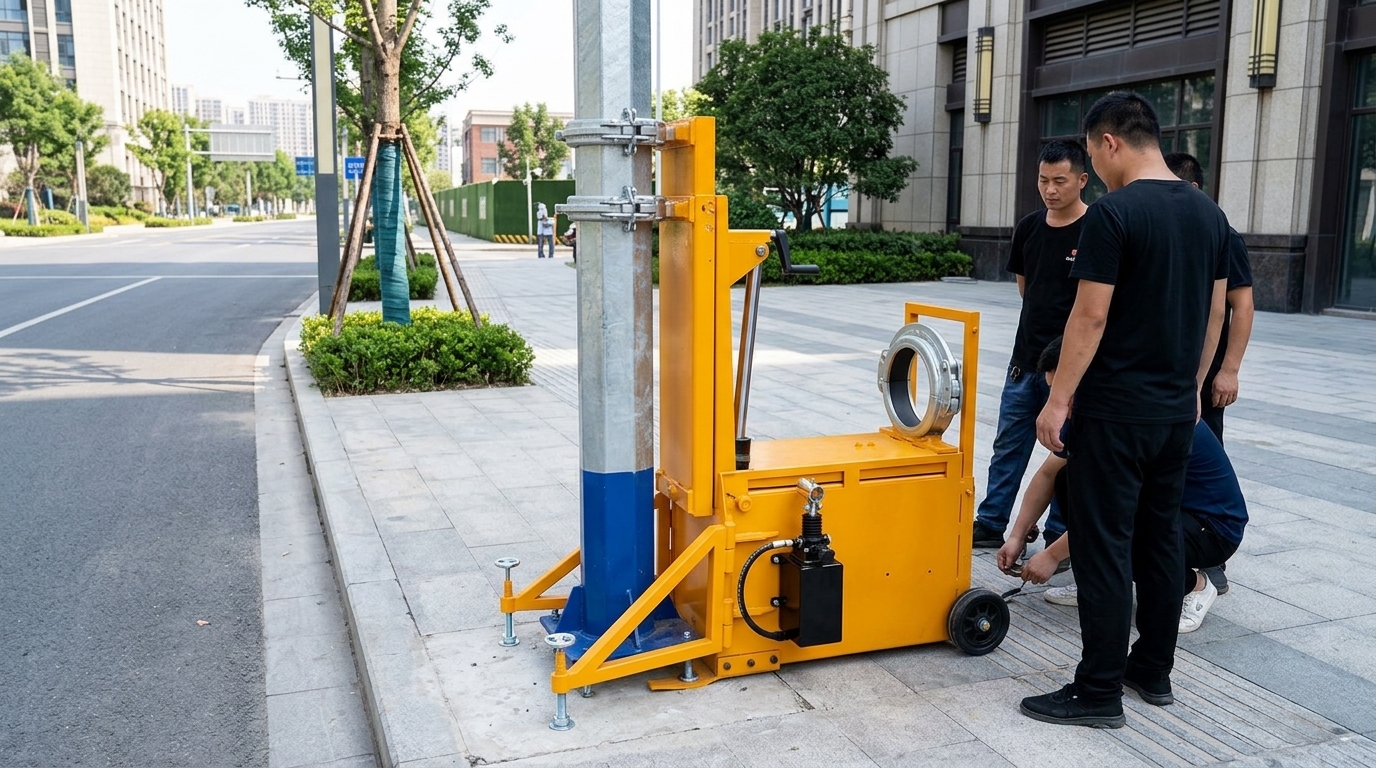 02 / Access reference
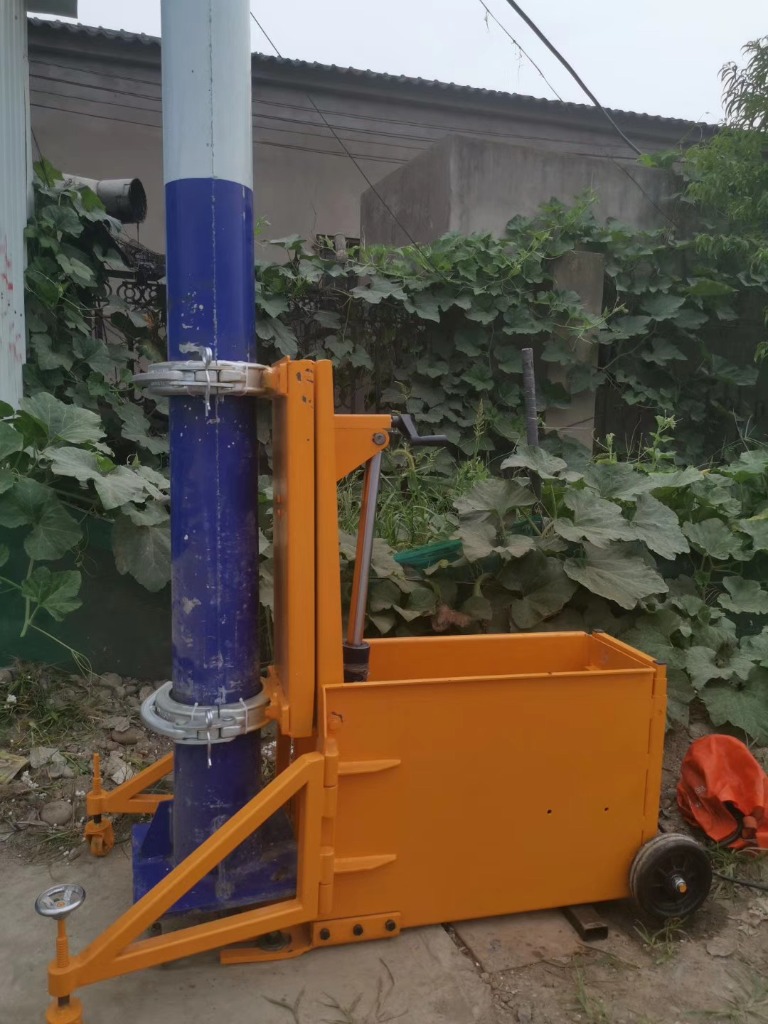 03 / Connection detail
Specify the actual pole assembly.
Send the pole drawing, its assembled weight and length, and the lighting equipment attached during lifting. Different pole assemblies within one project should be identified separately rather than represented by a single nominal height.
Record foundations and surroundings.
Share flange and bolt drawings, foundation details and relevant site information for engineering assessment. Ground conditions, slopes, nearby structures and services need project-specific assessment; the website does not supply acceptance limits for them.
- Pole schedule and assembly drawings
- Foundation and bolt details for each type
- Site plan, photographs and proposed work scope
Keep both methods in the review.
Compare a portable lifting arrangement with a crane-based proposal over the same tasks and site constraints. Include mobilisation, crew time, transport and remaining work. If a load or site cannot be confirmed for the proposed pole lifter, seek an assessed alternative instead of treating the smallest machine as the default choice.
Bring the information you have.
Unknown details can be flagged for follow-up. A request starts the configuration review; it does not approve the equipment for use.
Send project information ↗