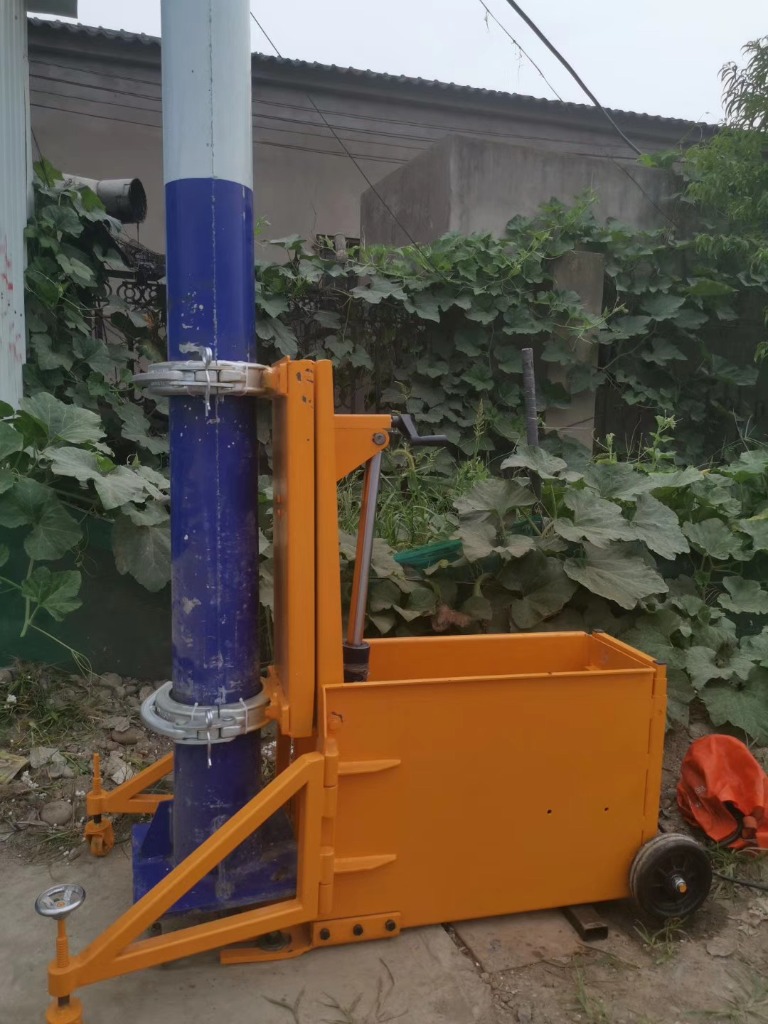
Define the method being considered.
Compare a portable hydraulic pole-lifting arrangement with a crane-based proposal for the actual assembly and foundation. Do not extend this product description into an improvised manual method or assume that accessories, connections or anchoring arrangements can be substituted.
Prepare the assessment inputs.
Start with the complete assembly drawing, weight and length. Add the flange, anchor-bolt and foundation information, site plan and the work scope. The source sheet's dimensions and bolt table support a discussion; they do not replace the project assessment.
Keep lifting separate from installation.
A full work package may include delivery, staging, assembly, lifting, alignment and other installation activities. The sheet's manufacturer-reported lifting time does not measure all those activities. Record full-scope crew time when comparing methods or building a cost scenario.
Use reviewed instructions for field work.
The source wording for flange dimensions, anchoring and operating position still needs engineering clarification. No anchoring depth, operating clearance, slope limit or sequence is supplied here. Ask for reviewed project documents and keep the method unresolved until the responsible team can confirm it.
General planning reference: UK HSE: planning and organising lifting operations ↗. This is UK guidance on competent planning; it does not certify this equipment or determine the rules for another destination.
Bring the information you have.
Unknown details can be flagged for follow-up. A request starts the configuration review; it does not approve the equipment for use.
Send project information ↗