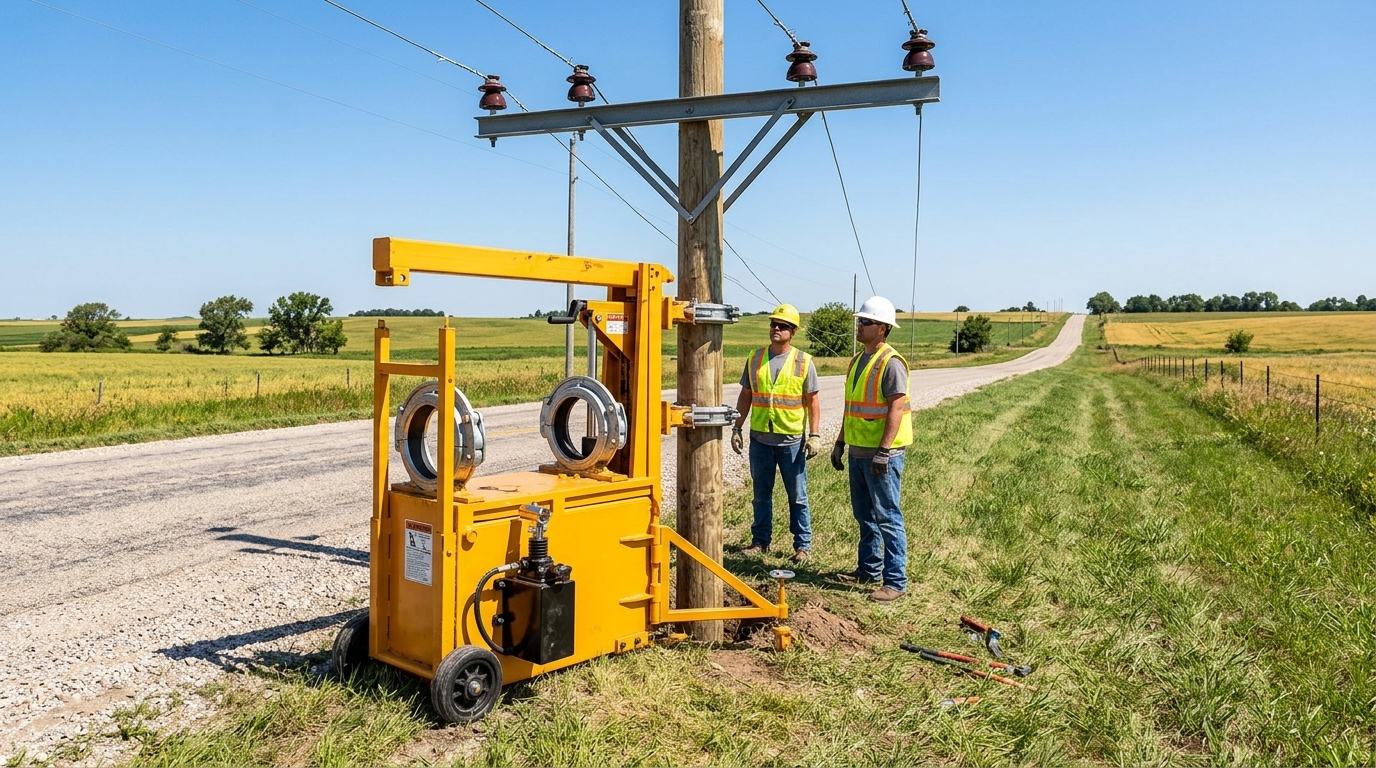
Describe what will be lifted together.
List the pole, luminaire, bracket, panel, battery and every item attached during the proposed lift. Provide an assembled weight and a drawing showing their positions. A bare-pole weight is not a substitute for the weight of the intended assembly.
- Pole length, material and assembled weight
- Panel, bracket and battery arrangement
- Supplier drawing and proposed assembly scope
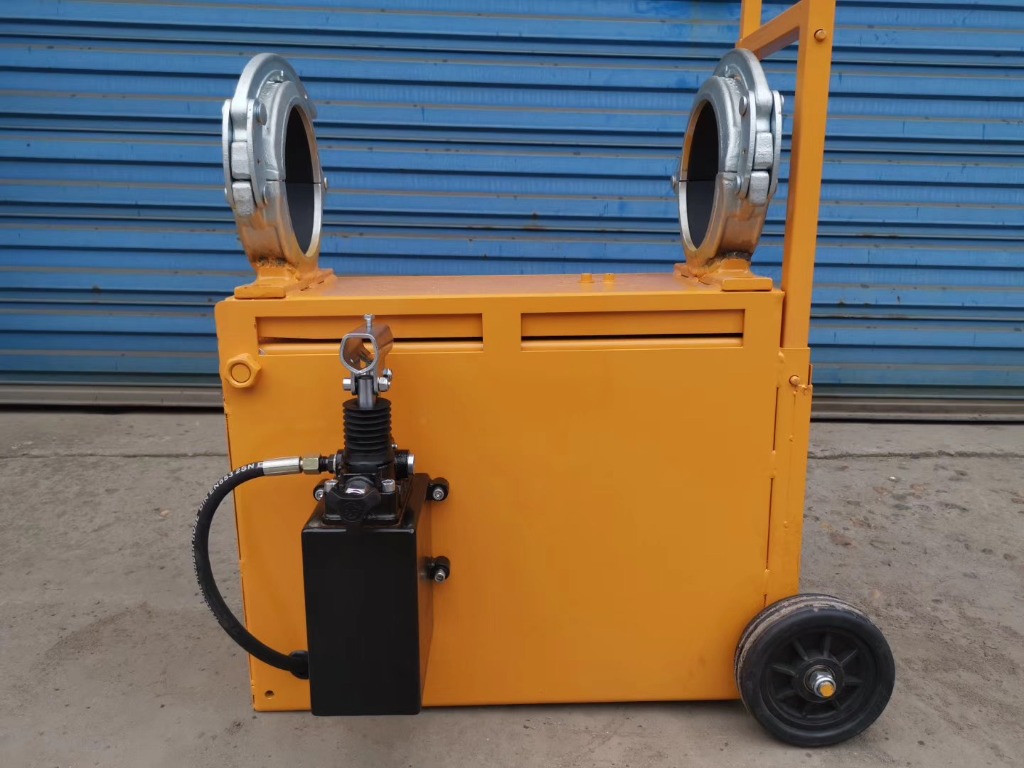 02 / Equipment detail
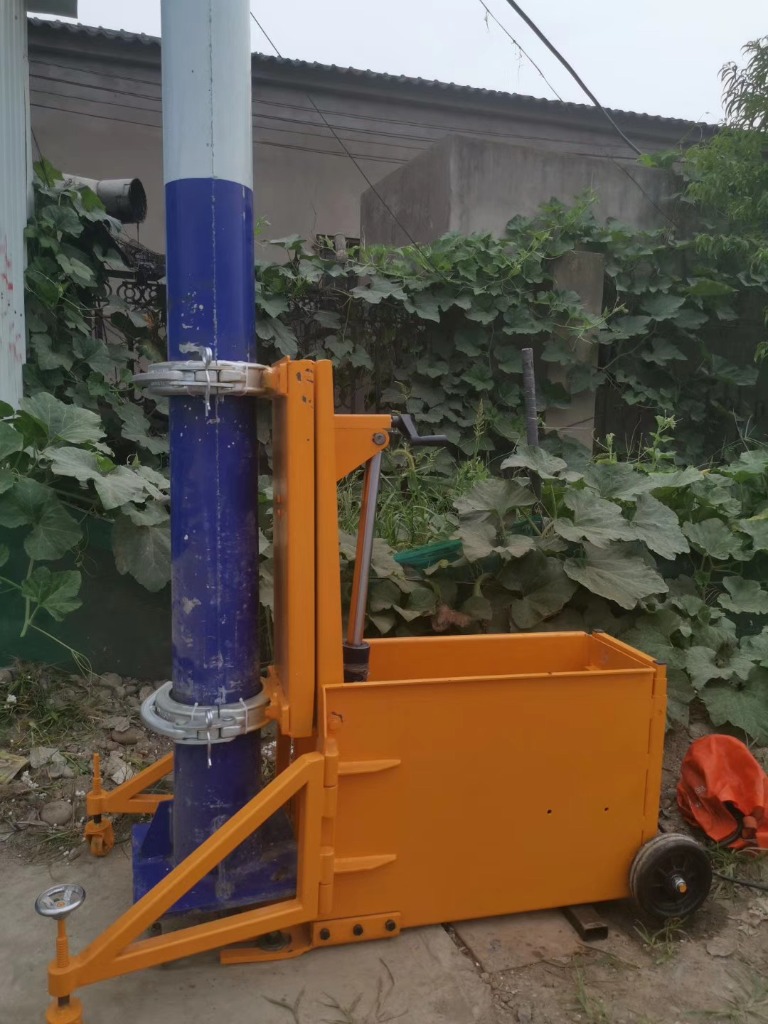 03 / Connection detail
Connect the assembly to its foundation.
Include the base-plate drawing, flange dimensions, anchor-bolt arrangement and foundation information. The specification sheet lists bolt sizes, but a matching size does not approve a foundation or establish that a special adapter is supplied.
- Dimensioned pole-base and anchor-bolt drawing
- Foundation detail and project location
- Photographs that support the drawings
Compare the whole work package.
Define delivery, staging, assembly, lifting, alignment and the remaining installation work as separate activities. Ask which activities each proposed method covers. Manufacturer-reported lift time is not a measured duration for a complete solar installation.
Make the next decision from evidence.
The 12 m pole class and 300 kg rated load are source-sheet facts, not a verdict on the assembled system. The project needs a review of the actual load, connections, foundation and site. Where suitability remains unresolved, keep the equipment choice open rather than assuming that portability settles it.
Bring the information you have.
Unknown details can be flagged for follow-up. A request starts the configuration review; it does not approve the equipment for use.
Send project information ↗